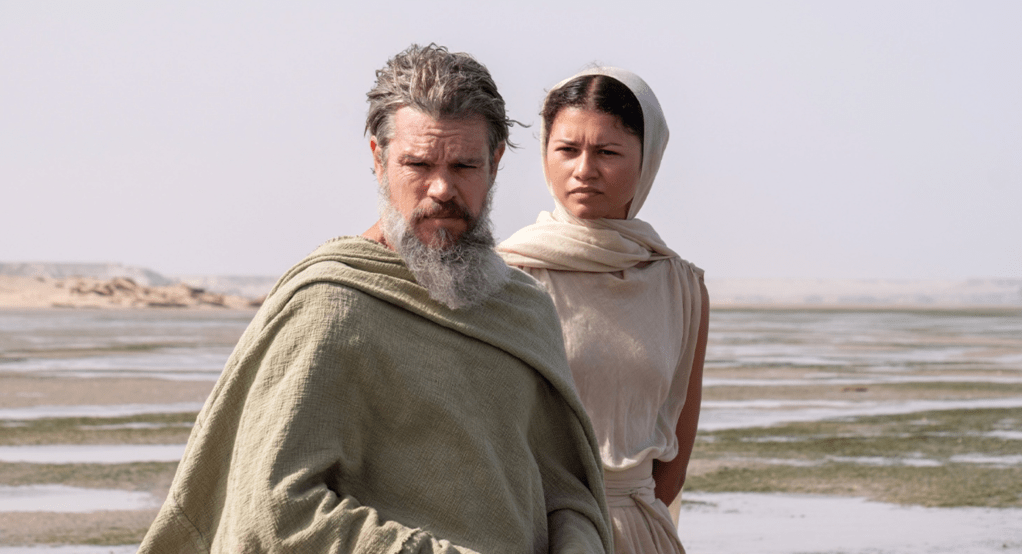
a year before The Odyssey hit theaters, people were already buying tickets.
no trailer, no review, no plot details beyond it being “the story I read in high school”. with just a release date, Christopher Nolan’s name, and the word IMAX, it sold out. sold out in multiple countries and a full year early.
that wasn’t luck, but it was a strategy — but this strategy was the opposite of how movies usually reach such high levels of success. usually, studios have a go-to move for hyping a movie before it drops: fly in influencers, screen it early, and let the reactions flood the social media feeds. it’s basically ‘free’ hype, and almost every major studio follows this process. but, Universal didn’t.
the influencer skip
so why skip the easiest marketing tool in Hollywood? well, that’s because it’s not really free anymore — it’s expected, and expected things just don’t feel as special. mostly every big movie does this influencer-style rollout now, which means every big movie kind of looks the same in the two weeks before release. now, it makes sense as to why production studios follow this technique. with influencers posting their shocked faces and reviews saying ‘this movie is like no other’, it’s simply fast advertising to reach target groups, especially with influencers with a dedicated fanbase — it creates buzz that make the movie feel exclusive, trendy, and important.
there’s also a trust problem with influencer marketing right now. audiences have grown skeptical of it, especially after several recent movies got glowing social buzz but a much more mixed response once actual critics began to weigh in. that gap in reactions has almost rained people to wait for real reviews before believing the hype.
the scarcity play
Universal’s other big move was to make people wait, and in the meantime, make sure there was almost nothing to see while they waited.
the first teaser for The Odyssey only ever played in theaters on December 22, 2025, around 7 months before the film actually premiered in theaters. it never went online; if you wanted to see it, you had to be in a seat.
this is almost the complete opposite of how trailers usually work. it’s pretty self-explanatory as to why: studios want trailers everywhere, instantly, to rack up views. by Universal doing the reverse-method of this, they treated this movie footage like something that had to be earned by showing up.
and of course, i can’t forget IMAX.
The Odyssey was the first feature film ever shot entirely with IMAX cameras. this isn’t just a technical detail, it’s the selling point of the movie. this movie isn’t loved just for the plot but for the art of it all — the projection format, the camera technology, and the attention to detail.
this exclusivity was very meal real and not just a marketing spin: the 41 IMAX 70mm screens worldwide averaged around $153,000 each in ticket sales on opening weekend alone.
Mike Coppola/Getty Images
the cast as the campaign
even with hiding the trailer and skipping influencers, you can’t just go silent. you need something else to fill that void… and Universal had the ultimate cheat code: the cast.
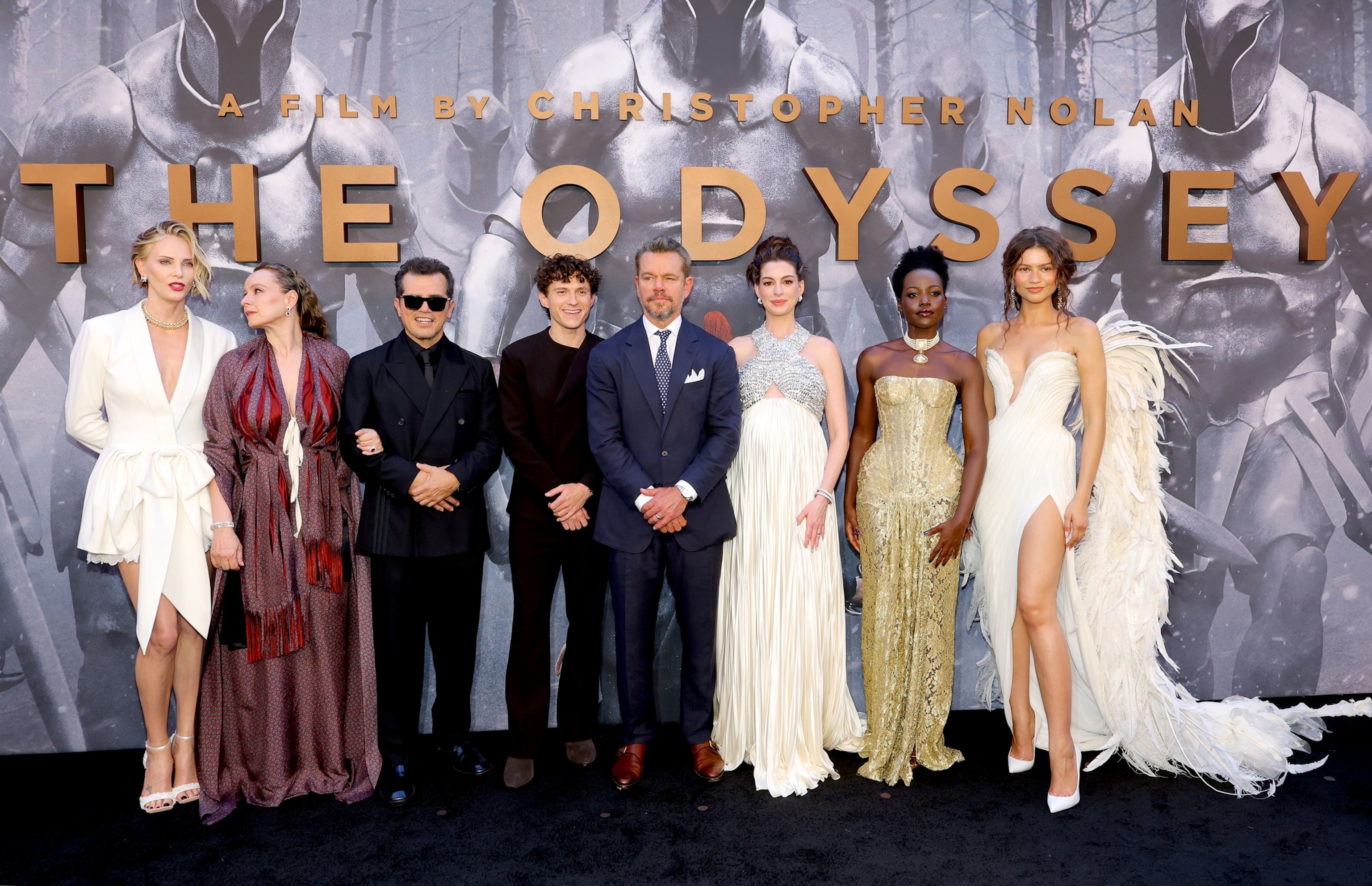
the ensemble on this movie is nothing short of just insane. Matt Damon, Anne Hathaway, Tom Holland, Zendaya, Robert Pattinson, Lupita Nyong’o, Charlize Theron, and Elliot Page. this is essentially a press tour pioneered to break records.
and of course it did! the lead actors: Damon, Holland, Hathaway, and Zendaya were pulling coverage on their own the entire time while the studio withheld its footage. people were not able to talk about clips from the movie just yet but they were able to talk about it just from the people in it. from red carpet looks, the Grecian-inspired styling, and the fact that Zendaya and Tom Holland are married in real life and promoting the film together (how cute!)
and notice how none of this cost Universal a single frame of footage.
the Nolan-as-Asset Negotiation
Christopher Nolan doesn’t get treated like a director, he gets treated like a movie star. just looking at the numbers, Nolan’s films across his career have grossed more than $5 billion at the box office, not just from one hit, but from a two-decade streak of success.
The Dark Knight Rises has stood at his career benchmark for over a decade, finishing its run at $1.08 billion worldwide. Oppenheimer, despite sweeping seven Academy Awards including Best Picture, still grossed just under a billion. so when The Odyssey came along, it was a guaranteed success story. as of right now, the film has grossed ~$666 million worldwide.
Universal gave Nolan full creative control, a cut of the profits, a guaranteed marketing commitment, an extended theatrical-only window, and a blackout period before the film could hit streaming. normally, these deal terms are reserved for the A-list actors, not the person behind the camera.
why does that matter for marketing? because it means Nolan’s name alone became a reason to buy a ticket before a single ad ran. a full year before release, over 70% of people who knew of the movie’s existence said they already planned to see it in theaters — compared to just 45% for something like Avatar: Fire and Ash.
the controversy question
now, not every part of the campaign was quiet and controlled. in some parts, the “do less” strategy that the studio was following was much more a risk and not just a stylistic choice.
the final trailer for the movie officially dropped online about five months after its exclusive theatrical debut. and the trailer picked up around ~542,000 dislikes, tied to a few overlapping controversies. the biggest of these was casting — specifically Lupita Nyong’o as Helen of Troy and Elliot Page as Sinon.
another debate included the dialogue as viewers pointed out that the characters were speaking in modern American accents and contemporary phrasing, feeling that the film was drifting too far from it’s “epic” origins. users on Reddit said it just felt too modern and off-putting compared to the expected elegant and poetic sound of a 2,700-year-old myth.
Nolan addressed this directly, saying he wanted the language to carry “emotional not intellectual meaning to people”. he wanted to prioritize how a scene feels over how “authentic” it sounds.
Universal as the studio itself was the same: silence. no statement, no defense, and no attempt to steer and calm the conversation. Nolan would speak for himself in interviews, but there was no interference from the studio.
this could be a real gamble. controversy can sink a movie before it opens if a studio lets it run too long unanswered (plenty of films have died this way). this was proof that Universal was willing to bet the same instinct that worked for trailers and press access would also work for criticism: that saying nothing kept the story about the movie itself.
did the bet pay off?
now, let’s do some math. Universal spent around $250 million making The Odyssey, plus another $125 million marketing it — roughly $375 million total (all before a single ticket sold!) analysts estimated it needed to clear $700 million globally just to break even.
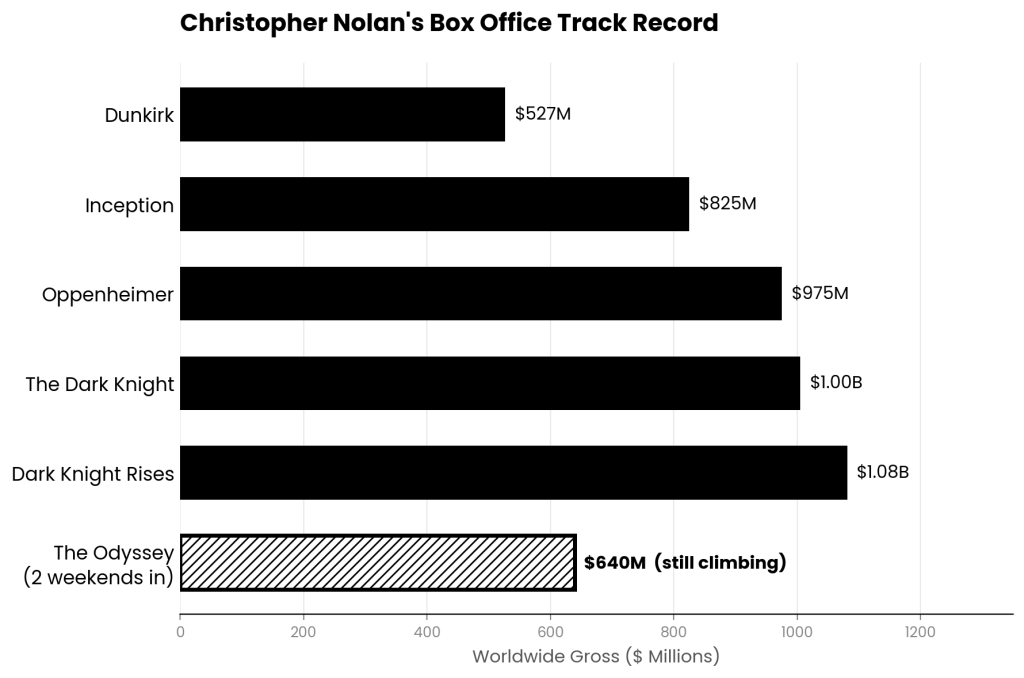
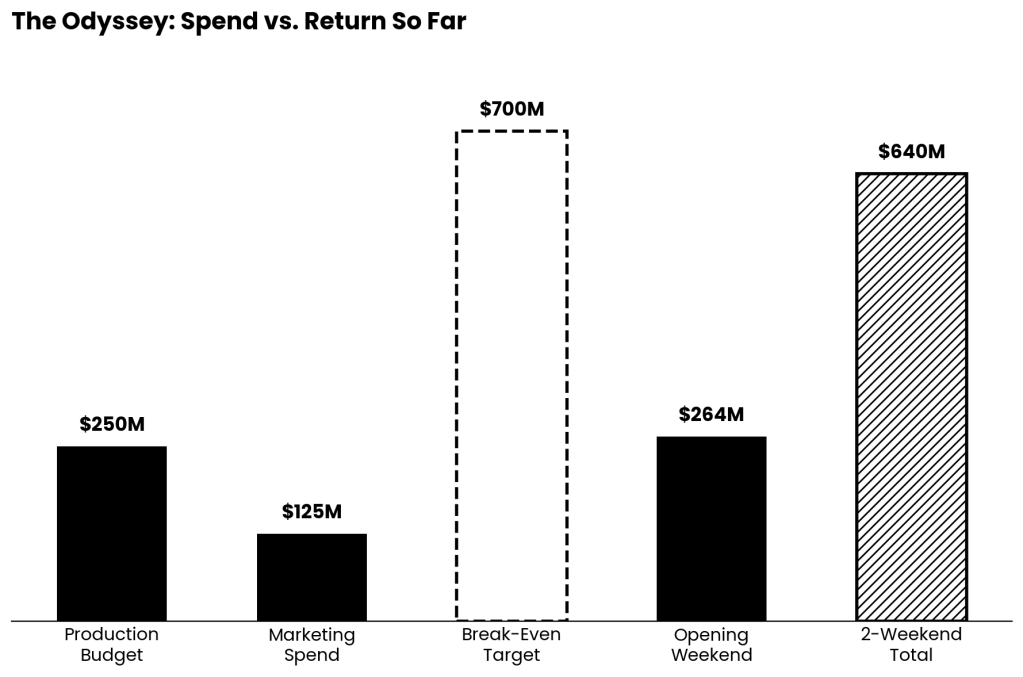
here’s the results: the film opened to $264 million worldwide, the biggest global debut of Nolan’s entire career, beating even The Dark Knight Rises. Its second weekend added another $87 million domestically, breaking Nolan’s own record, and pushed the film past $639 million worldwide in just two weekends. at this pace, industry trackers see a real path to $1 billion. some are even questioning if it could pass Deadpool & Wolverine’s $1.338 billion to become the highest-grossing R-rated movie ever made.
so… did this unique method all work? skipping influencers, hiding the trailer, leaning on the cast instead of the clips, betting everything on Nolan’s name and track record, staying silent throughout backlash. by every number available right now: yes, and not by a small margin.
every “rule” of modern movie marketing assumes you need constant visibility to stay relevant — trailers everywhere, influencers everywhere, content everywhere, all the time. The Odyssey did the opposite at nearly every turn, and the reason why it worked was because Universal wasn’t trying to manufacture demand from nothing. rather, it was managing demand that already existed.
sometimes the smartest marketing move isn’t doing more, or even defending what you did. it’s knowing exactly when to say nothing at all.
thank you for tuning in to this week’s post! we look forward to hearing your thoughts.


stay updated on the trends that are shaping modern culture, from beauty and home decor to the newest brand launches and lifestyle must-haves. don’t miss out, subscribe now!


Leave a Reply